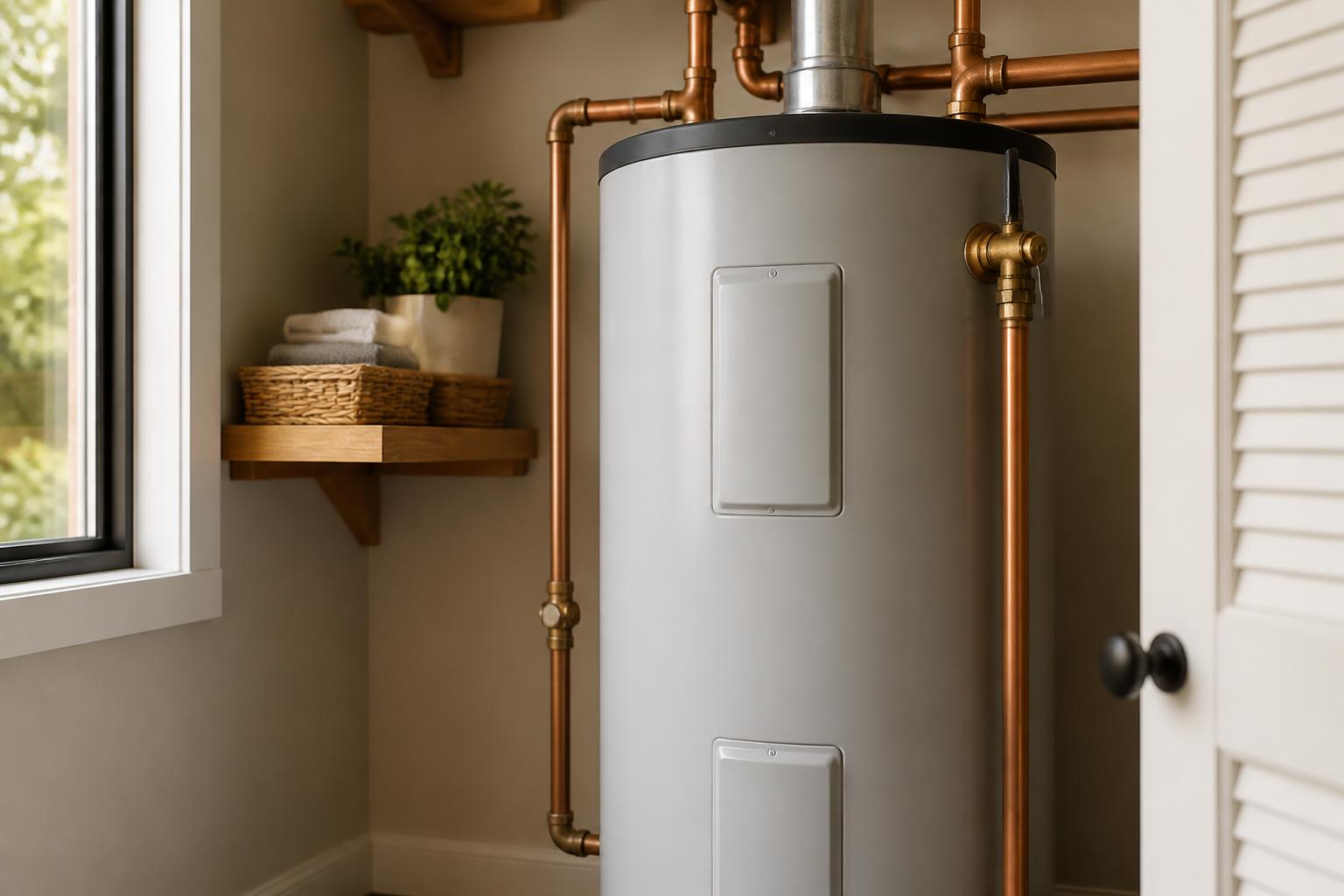
No hot water? Lukewarm showers, rumbling sounds, or water around the tank can turn a normal day into a mess fast. If your water heater is acting up, the safest next step is to have it checked before a small fault turns into a bigger repair.
Plumbing San Diego & Drain Cleaning Pros helps homeowners with water heater repair across San Diego, CA. We look for the source of the problem, explain what needs attention, and get the unit back to delivering the hot water your home relies on.
Water heaters usually give a few clues before they stop working altogether. Some signs are obvious, while others show up slowly and are easy to ignore until a shower turns cold.
If you notice one or more of these symptoms, it usually means the water heater needs attention rather than another temporary workaround.
When Plumbing San Diego & Drain Cleaning Pros arrives for a repair visit, we start with the symptoms you have seen at home. Then we move through the unit step by step to narrow down the cause.
We check whether the water heater is heating at all, heating unevenly, or losing heat too quickly.
We look for leaks, corrosion, moisture, and any signs that show where the trouble is starting.
We inspect the components that control the heater’s performance and note anything that is worn or damaged.
We confirm whether the problem is affecting the entire home or only certain hot water points.
This kind of check helps avoid guesswork. Instead of replacing parts that are not causing the issue, we focus on the real source of the failure.
Water heater repair can mean different things depending on what the unit is doing. Some problems are caused by a single failed part. Others point to buildup, a damaged connection, or a tank that is nearing the end of its usable life.
If the water is only lukewarm or runs cold quickly, the problem may be tied to the unit’s ability to heat water consistently. We look at the symptoms and determine whether the issue is isolated or affecting the full tank.
Water around the base of the heater should never be ignored. Even a small leak can damage floors and signal a deeper issue with the tank, fittings, or connected lines.
Pop, crackle, and rumble sounds often mean there is buildup inside the unit. That buildup can make the heater work harder and can shorten its useful life if it is left alone.
Sometimes the heater is producing hot water, but it is not reaching fixtures the way it should. Reduced output, uneven temperature, or delayed hot water may point to a repairable issue within the system.
Not every water heater problem calls for a replacement. Many units can be repaired if the issue is caught early and the tank is still in workable shape.
Repair often makes sense when:
We will tell you if a repair is the practical path or if the condition of the unit makes ongoing fixes a poor choice. That way you can make a clear decision without being pushed into unnecessary work.
A repair visit should feel straightforward. You should know what is being checked, what the issue appears to be, and what the next step involves.
We start with your observations, such as noise, temperature changes, leaks, or lack of hot water.
We review the heater, connections, and nearby signs that help point to the fault.
We tell you what is happening, what repair is needed, and what should be watched after the work is done.
Once the issue is identified, we move ahead with the repair needed to restore hot water service.
Plumbing San Diego & Drain Cleaning Pros keeps the process focused on the actual problem so you are not left guessing about the condition of the unit.
Waiting too long can turn a manageable repair into a larger one. A heater that is struggling may still provide some hot water, but that does not mean it is safe to ignore.
Small leaks can worsen. Internal buildup can keep stressing the unit. A failing part can cause the heater to stop working when you need it most. Addressing the problem early helps protect your home and keeps the repair simpler whenever possible.
If your water heater is showing signs of trouble, it is better to have it checked before the issue spreads to other parts of the system or creates water damage around the unit.
We provide water heater repair for homeowners throughout San Diego, CA and nearby communities, including Chula Vista, El Cajon, La Mesa, Santee, National City, Lemon Grove, Poway, and Coronado. If you are nearby and need help with a heater that is not performing the way it should, we can take a look and move the repair forward.
Plumbing San Diego & Drain Cleaning Pros works from 2383 Cardinal Dr, San Diego, CA 92123, USA, and can be reached at +18583928986 during business hours.
Rumbling, popping, or crackling sounds often point to buildup inside the tank. The unit may still heat water, but the noise can be a warning that it needs attention.
Rusty water from hot taps can point to corrosion inside the heater or related parts. It is a sign that should be checked rather than ignored.
Short hot water supply can happen when the heater is struggling to keep temperature, has buildup inside, or is not operating the way it should.
Yes. Even a small amount of water around the heater can signal a larger problem and may lead to damage if it keeps spreading.
Lukewarm water often means the heater is not reaching the right temperature or is losing heat too quickly. That usually calls for a repair check.
If the unit is still producing some hot water and the issue seems limited, repair may be the practical choice. An inspection can show whether that is the case.