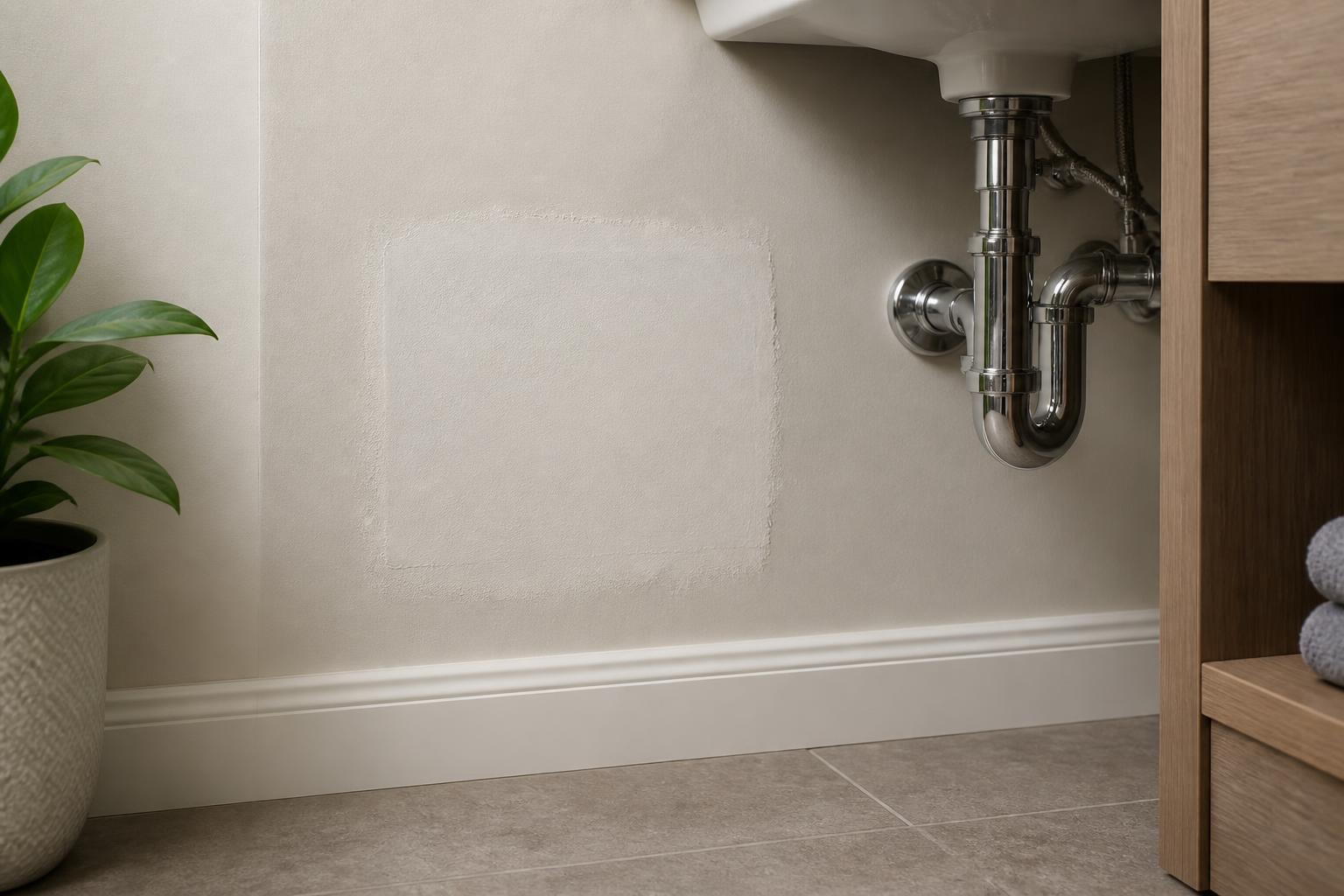
A small leak can leave you with damp spots, a sudden bump on the water bill, or a cabinet that keeps feeling wet for no clear reason. If you have noticed a musty smell, water pooling near a fixture, or a stain that keeps growing, it is time to get the source checked before the damage spreads.
Plumbing San Diego & Drain Cleaning Pros helps homeowners track down leaks behind walls, under sinks, near toilets, around water heaters, and along visible plumbing lines. We focus on finding the source quickly so you can move from guessing to a clear repair plan.
Some leaks are obvious, but many start quietly. By the time water shows up on a floor or ceiling, the problem may already be more than a loose fitting or worn seal. Paying attention to early signs can save you from larger repairs later.
When these signs show up together, the problem is often more than surface moisture. We look at the clues as a whole, which helps narrow down where the leak is starting and how far the water may have traveled.
Leaks do not always show up where the water appears. A stain on one wall can come from a pipe several feet away, and a wet patch near a cabinet can trace back to a fitting behind it. That is why finding the source takes more than a quick glance.
Common indoor problem spots include supply lines under sinks, toilet connections, shutoff valves, faucet bodies, and pipe joints tucked inside walls or ceilings. Water heaters can also show signs of seepage around nearby connections or valves.
Some leaks develop under flooring, behind baseboards, or along slab-adjacent piping paths. These are often the hardest to identify because the water may travel before it becomes visible.
Small, steady drips from faucets, toilets, and garbage disposal connections can waste water while causing damage around the fixture base. Even a minor drip can become a larger issue if the surrounding materials stay damp.
At Plumbing San Diego & Drain Cleaning Pros, we approach leak detection as a process of elimination. We start with the symptoms you noticed, then examine the most likely points of failure so we can locate the source without turning your home into a guessing game.
This method is especially useful when a leak is not obvious. Instead of replacing parts at random, we focus on the evidence and narrow the search.
Different parts of a plumbing system fail in different ways. Knowing the usual culprits helps homeowners understand why a leak might appear suddenly even when nothing has changed nearby.
Leak detection matters because the visible sign is often only the last stage of the problem. Once water has had time to move through the surrounding area, a quick patch without finding the source can leave the issue active.
If you think you have a leak, a few simple steps can help reduce damage before a plumber arrives. These are not fixes, but they can help you protect nearby surfaces and narrow down the problem.
Those details often help us get to the source faster. A leak that shows up only after a toilet is used, for example, points us toward a different set of connections than one that stays wet all day.
Once the leak is located, the next step depends on what failed and how much surrounding damage has occurred. Some problems call for a simple part replacement, while others need a more involved pipe solution.
A faucet, toilet, or disposal connection may only need a worn part replaced or a loose fitting tightened. These issues are common and can become expensive if water continues escaping into cabinets or flooring.
If a pipe section is split, corroded, or otherwise compromised, a localized repair or pipe replacement may be the right path. The goal is to stop the leak at its source rather than mask the symptoms.
Leaks around a water heater deserve prompt attention because nearby connections and valves can affect a larger part of the system. We check the area carefully to separate a true source from moisture that has traveled from another spot.
Water does not stay where it starts. It moves into drywall, wood, insulation, and flooring, which can turn a small leak into a broader repair issue. The sooner the source is identified, the less chance there is for hidden damage to spread.
Fast leak detection also helps you avoid repeated cleanup. If you are wiping up the same area again and again, the problem is still active. Finding the exact source gives you a clear next step instead of a cycle of drying, guessing, and waiting.
For homeowners in San Diego, CA, leak detection can be especially helpful when the source is not obvious from the outside. A careful inspection can separate a fixture issue from a line issue and point you toward the right repair without unnecessary disruption.
Hidden leaks often show up through clues like stains, odors, warped materials, or an unexplained change in water usage. If the wet area keeps returning, the source may be inside a wall, under a floor, or behind a fixture.
Yes. A toilet leak may not always leave an obvious puddle. Moisture can collect around the base, seep into surrounding material, or appear only after the toilet is used.
That usually means the source is still active. Water can spread through porous materials and create a bigger visible area even when the leak itself is small.
They do. A faucet drip may seem minor, but repeated water escape can stain finishes, damage nearby surfaces, and point to worn internal parts that need attention.
Look for damp cabinet bottoms, corroded fittings, loose supply lines, and water marks around the drain assembly. If the cabinet smells musty, there may be moisture you cannot see right away.
That is a good time to have the leak evaluated. Water often travels away from the source before it becomes visible, so the spot you notice is not always the spot that needs repair.
If you are seeing signs of a leak at your San Diego, CA home, contact Plumbing San Diego & Drain Cleaning Pros at +18583928986. We can help identify the source, explain what is happening, and move you toward the right repair before the damage spreads further.