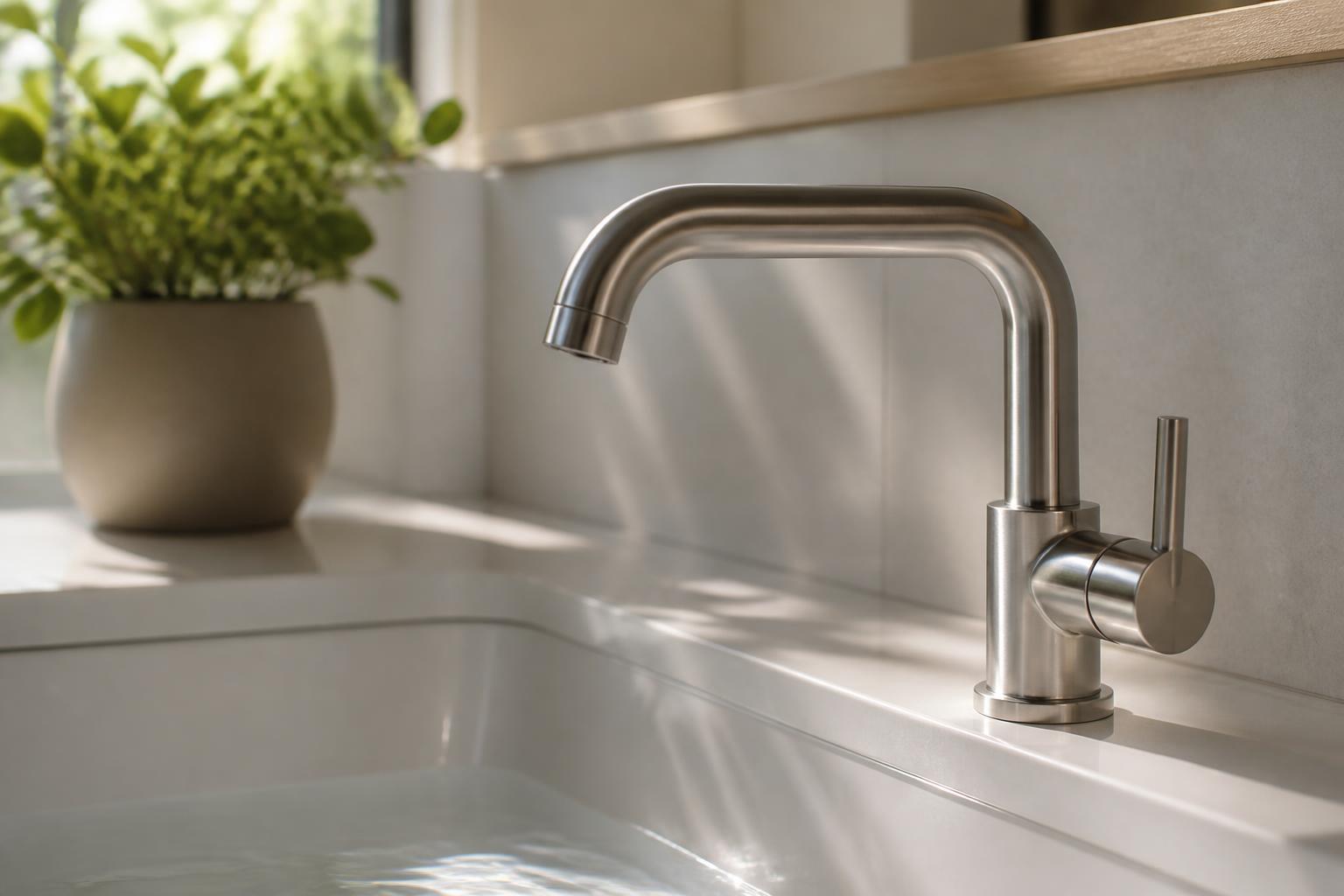
A dripping faucet can turn into a daily nuisance fast. You may hear constant tapping at the sink, notice water around the base, or find the handle getting harder to turn each day.
When that happens, Plumbing San Diego & Drain Cleaning Pros can help with faucet repair across San Diego, CA. We track down the source of the problem, fix worn parts, and get your sink back to normal use.
Faucet trouble rarely starts big. Most calls begin with a small leak, a stiff handle, or a faucet that seems noisy every time you use it. Those early signs often point to worn internal parts, loose connections, or mineral buildup around moving components.
If you are seeing any of the issues below, it is a good time to schedule repair:
These symptoms can start with a single worn washer or cartridge, but they can also point to supply line trouble or a damaged valve seat. The sooner the cause is found, the easier it is to avoid bigger repair work later.
Faucets come in a few common styles, and each one can fail for different reasons. A quick visual inspection does not always reveal the source, so we look at the complete fixture, the handles, the spout, and the connections below the sink.
Kitchen faucets get frequent use, which makes them more likely to develop drips, looseness, and handle wear. We repair issues that affect daily tasks like rinsing dishes, filling pots, and washing hands.
Bathroom sink faucets often show leaks at the base or around the handle first. We check for worn seals, loose parts, and problems that create pooling around the sink top or cabinet below.
Some utility sinks and side fixtures develop hard-to-ignore drips or noisy operation. We can evaluate the fixture and replace the parts that are causing the trouble instead of suggesting a full replacement when repair will do the job.
Faucet repair is usually straightforward when the problem is identified early. The key is matching the symptom to the actual cause, since a drip at the spout may not come from the same part that is causing a leak at the handle.
We look over the faucet, test the handles, and check the visible supply connections beneath the sink.
We identify the worn or damaged parts causing the leak, stiffness, noise, or uneven water delivery.
We replace faulty seals, cartridges, washers, or other worn components as needed for the fixture.
After repair, we run the faucet and check for leaks, smooth handle movement, and steady water at the spout.
This approach helps avoid guesswork. It also gives you a clearer answer on whether the faucet can be repaired or if a deeper fixture issue needs attention.
Some faucet issues are easy to ignore at first, especially if the water loss seems small. But ongoing drips and slow leaks can waste water, stain sinks, and leave cabinets damp. A faucet that is harder to turn can also become more frustrating with each use.
Call us if you notice:
Plumbing San Diego & Drain Cleaning Pros helps homeowners throughout San Diego, CA with faucet repair that is focused on the actual cause, not a quick patch that leaves the same problem behind.
Before a repair begins, it helps to know what the visit will cover. We keep the process practical and clear so you know what we are checking and why.
If you can, note when the faucet leaks, whether the drip is constant, and whether the problem is at the handle, base, or spout. Those details can make diagnosis faster.
We inspect the faucet assembly, check visible connections, and evaluate the condition of the moving parts. If a part has failed, we explain what needs to be replaced and what the repair will address.
We test the faucet under normal use and look for lingering leaks, loose movement, or noise. If the fixture is still showing signs of trouble, we revisit the source before wrapping up.
Not every faucet problem calls for a new fixture. Many issues come from internal parts that can be replaced without changing the whole unit. That is often the case with drips, stiff handles, and leaks around the base.
Replacement may make more sense when the faucet has repeated failures, extensive corrosion, or damaged parts that are no longer holding up. We will walk through the condition of the faucet so you can make a practical choice for your sink and your home.
Repair is often the right move when the fixture is otherwise sound and the problem is limited to a worn component or loose connection.
If multiple parts have failed or the fixture keeps coming apart after repairs, a new faucet can be the more reliable option.
After a faucet has been repaired, a few habits can help you keep an eye on it and catch small changes early. You do not need complicated maintenance to stay ahead of another leak.
Small changes often give the clearest warning. If a faucet starts acting different, it is worth having it looked at before the problem grows.
We provide faucet repair from our San Diego location at 2383 Cardinal Dr, San Diego, CA 92123, USA, and serve homeowners across the area, including Chula Vista, El Cajon, La Mesa, Santee, National City, Lemon Grove, Poway, and Coronado.
If your faucet is leaking, stiff, or making daily use harder than it should be, Plumbing San Diego & Drain Cleaning Pros is ready to help with clear, focused repair service.
A drip after shutoff usually means an internal part is worn or not sealing all the way. The exact part depends on the faucet style and where the leak shows up.
Pooling at the base can come from worn seals, a loose mounting point, or a leak that is traveling from another part of the fixture.
Stiff handles often point to buildup, worn cartridges, or internal parts that are binding during use. It can start with a small amount of resistance and get worse over time.
Yes. Noise may come from loose parts, worn components, or water moving through a fixture that needs attention. The sound can help narrow down the cause.
Yes. Even a small leak can waste water, stain surfaces, and create damp spots under the sink. It is usually easier to handle early than after the fixture has worn down further.
It helps to know whether the leak is from the handle, base, or spout, how long the problem has been happening, and whether the faucet is still easy to turn on and off.