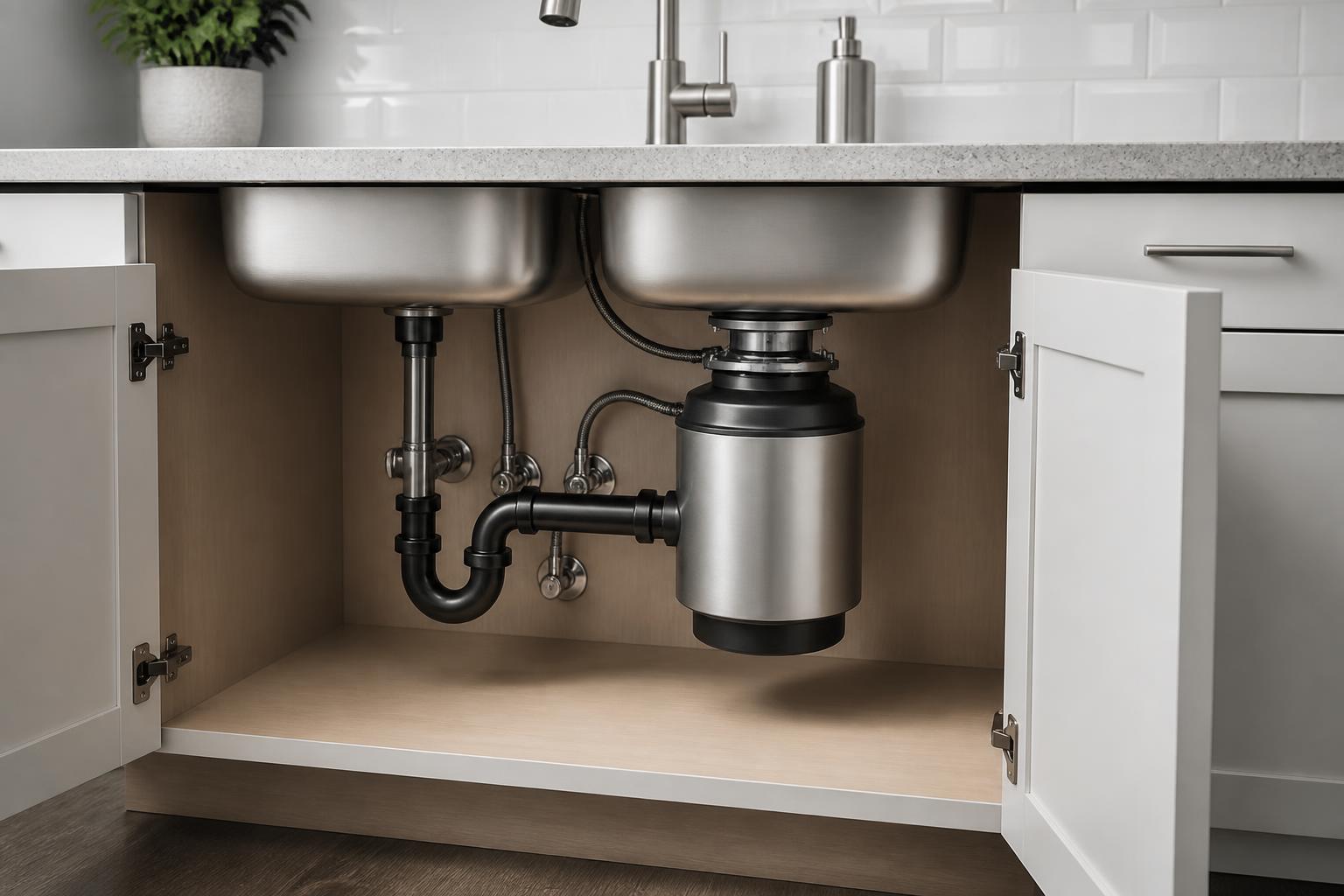
A garbage disposal that hums, rattles, leaks, or stops mid-use can turn a simple cleanup into a kitchen mess. If your sink backs up, food scraps linger, or the disposal only makes a low buzzing sound, it is time to get it checked before a small jam becomes a bigger repair.
Plumbing San Diego & Drain Cleaning Pros helps homeowners across San Diego, CA handle garbage disposal problems with clear answers and practical repair work. We look at the symptoms, trace the cause, and restore the unit so you can get back to normal kitchen use without guessing at what went wrong.
Garbage disposals usually give a few signs before they stop working altogether. Catching those signs early can help you avoid sink backups, unpleasant odors, and extra strain on the drain line.
If any of these sound familiar, a repair visit can help determine whether the issue is a jam, a clog, a loose connection, or a unit that is nearing the end of its life.
Many disposal problems start with what goes down the sink. Hard scraps, stringy food, or too much waste at once can slow the unit down and create a backup that feels bigger than it is.
Fibrous scraps, bones, and dense leftovers can wedge inside the chamber and keep the grinding parts from moving. When that happens, the motor may still hum, but the blades cannot do their job.
Sometimes the disposal itself is not the main problem. A clog may sit farther down the drain and make the sink drain slowly or not at all, even if the disposal sounds normal.
Vibration over time can loosen connections, splash guards, or mounting hardware. That can lead to leaks, rattling, or a unit that shifts while running.
When the disposal keeps shutting off, trips the reset, or no longer turns at all, the motor may be worn or damaged. At that point, repair depends on what the unit can still safely handle.
Plumbing San Diego & Drain Cleaning Pros approaches each disposal problem by starting with the symptoms you notice and then checking the unit, sink connection, and nearby drain path. That helps us avoid guesswork and focus on the actual source of the issue.
We check for jams, loose fittings, leaks, and visible wear.
If a jam or buildup is stopping the disposal, we remove the cause and restore movement where possible.
Slow draining can point to a clog beyond the disposal, so we look at how water moves through the sink line.
We look for leaks around the sink flange, discharge line, and other connection points.
After repair, we run the disposal and test the sink so you know what changed and what to watch next.
Some problems are quick fixes, while others show that the unit has internal damage or enough wear that repair is no longer the practical path. We explain what we find so you can make a clear choice.
When a disposal starts acting up, it is tempting to keep flipping the switch or pushing more water through. That can make the problem worse. If the unit is jammed, forcing it may damage the motor or turn a small obstruction into a larger repair.
It also helps to avoid reaching into the chamber without first shutting off power. Even a disposal that seems dead can start unexpectedly if the problem is electrical rather than mechanical. The safest next step is to stop using it and have it checked.
Not every disposal can be brought back with a simple fix. Some units have internal wear that shows up as repeated shutdowns, weak grinding, or persistent leaks. When that happens, repair may only provide a short-lived result if the unit is already near failure.
We look at the condition of the unit before recommending the next step. If the problem is limited to a clog, jam, or loose connection, repair is often straightforward. If the body of the unit, motor, or internal components are worn out, the answer may be different. Either way, you get a clear explanation of what is going on.
A garbage disposal lasts longer when it is used with a little care. Good habits do not eliminate every problem, but they can reduce clogs, odors, and strain on the unit.
If your disposal has already started to act differently, these habits can help after the repair is complete. They also make it easier to spot early warning signs the next time something changes.
When you contact Plumbing San Diego & Drain Cleaning Pros for garbage disposal repair in San Diego, CA, the goal is to make the process clear from the start. You tell us what the unit is doing, and we come prepared to look at the symptoms that matter most.
Our visit centers on the disposal, the sink connection, and the drain line nearby. That matters because a noisy unit, a slow sink, and a leak under the cabinet can be connected or separate. By checking the whole setup, we can avoid fixing only part of the problem.
We also keep the conversation practical. If the disposal can be repaired, we explain the cause and the fix. If another issue is affecting the sink, we point that out too, so you are not left wondering why the same problem keeps returning.
A humming sound often means the motor is receiving power, but something is keeping the blades from turning. A jammed object, compacted food waste, or an internal issue may be blocking movement.
Backups can happen when the disposal is clogged, the drain line is restricted, or both. The water has nowhere to go, so it returns to the sink instead of draining away.
Leaks often come from loose mounting hardware, worn seals, the sink flange, or a connection on the discharge side. Tracing the exact source matters because water can travel and make the leak look larger than it is.
Yes. Food residue can stick inside the chamber, under the splash guard, or in the nearby drain path. That buildup can create strong odors even if the unit still runs.
The reset button may trip when the unit overheats, binds up, or struggles against a blockage. If it keeps shutting off after a reset, the cause needs a closer look.
If the unit sounds normal but the sink still drains slowly or backs up, the blockage may be farther down the line. That is one reason a repair visit should check both the disposal and the connected drain path.
If your garbage disposal is noisy, leaking, jammed, or slowing down your kitchen sink, it is worth getting a professional look before the problem spreads. Plumbing San Diego & Drain Cleaning Pros serves homeowners in San Diego, CA and nearby areas with straightforward garbage disposal repair that focuses on the source, not just the symptoms.
Call +18583928986 to set up service at 2383 Cardinal Dr, San Diego, CA 92123, USA. We are available Monday through Sunday, 9:00 AM to 5:00 PM.